
If your jar of delicious honey turns into a semi-solid, gritty mess – don’t panic. Your honey has likely crystallized – a natural process that happens to most honey over time. You can fix it and get rid of those sugar crystals without damaging the flavor or destroying any beneficial properties. In this guide, you’ll learn how to decrystallize honey safely using simple methods that actually work.
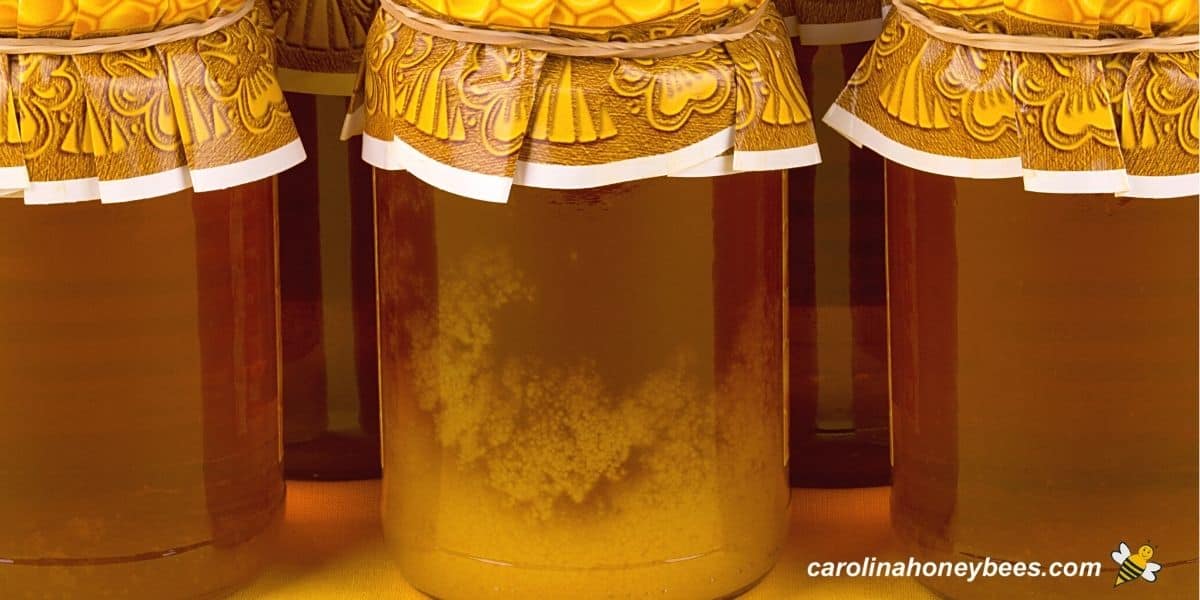
As a beekeeper, I sometimes have 5 gallon buckets of honey that solidify. No joke, that can be a pain. But, we have all exerienced times when our raw honey “turns to sugar” as my Granny said. Thankfully, decrystallizing honey is not difficult it just takes a bit of patience.
Honey Crystallization is Not Always a Bad Thing
The natural process of crystallization can be alarming to someone who does not understand why it is happening. Honey is a supersaturated sugar – over time the glucose separates from the water and forms crystals.
This happens in raw honey much faster than pasturized or filtered products. If you want to learn more about the nitty gritty of it all – read my post on Why Honey Crystallizes.
Of course there are several factors involved in how fast this happens:
This is why some types of honey crystallize fast and others do not. So, crystallization may be a sign that you have high quality raw honey – but it is not a guarantee!

Safety Tips Before Decrystallizing Honey
Most people prefer honey in a liquid state. Heat will melt the sugar crystals that are forming – but too much heat will harm the integrity of your honey.
The trick is to restore it back to liquid using a slow controlled heat. How slow and how hot is a subject of serious debate among honey lovers. I will give you the basics and let you decide for yourself.
Keep these tips in mind:
- keep heat low and slow
- never boil honey
- gentle indirect heat works best (water bath)
- remove or loosen lids if using glass jars
- plastic bottles may warp
Some people do use the microwave or even an oven to gently warm honey. I don’t recommend it. I honestly feel that the old “hot water bath method” is best.
How to Decrystallize Honey – Step by Step
You may have to repeat these steps more than one time. This is a gentle process of coaxing honey back to its liquid form.
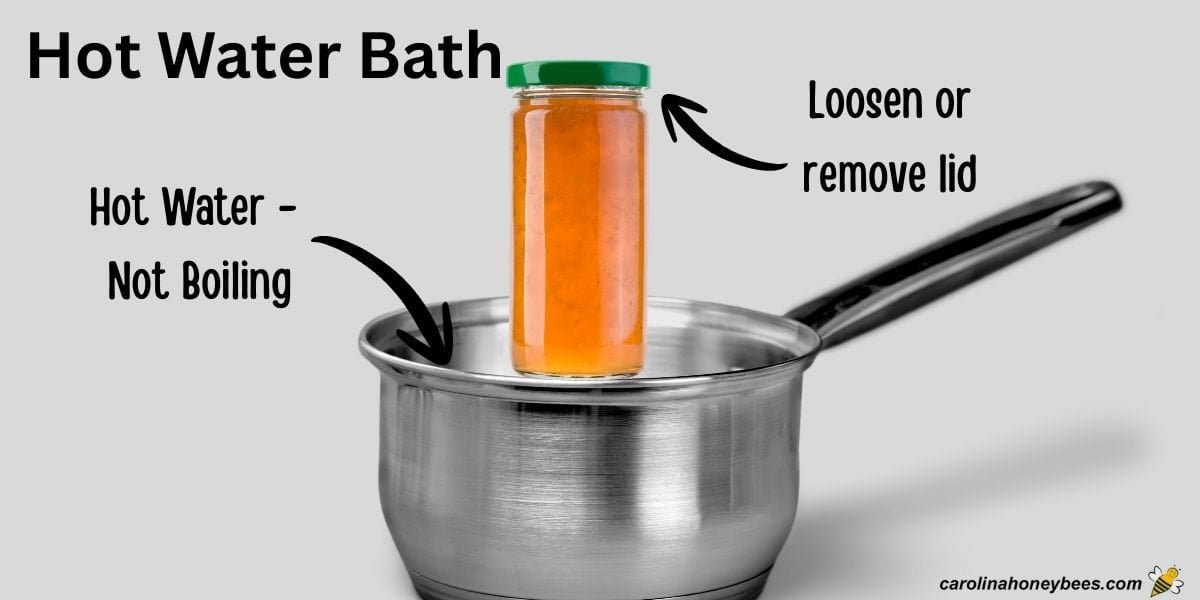
Hot Water Bath Method
You only need a few materials in addition to your glass jar of honey.
- saucepan
- water
- heat source
The easiest way to bring honey back to a liquid state is the slow and easy route. We want to create a “hot tub” figuratively speaking for our jar of honey.
1. Be sure your honey is in a heat safe container (spoon it out into a glass jar if necessary). I like to add a lid on top – loosely. (This prevents water from getting into the jar).
2. Fill a pan with several inches of water. Place your jar of honey in the pan. You do not want to submerge the jar in water. (Do not let water cover the top of the jar.) Water only needs to go up to the level or height of honey in the jar.
3. Gently, heat the water until it becomes very warm. It should not boil. Once you see steam starting to rise – it is time to turn off the heat source – or remove the pot from the heat.
4. Now, let your jar of honey sit in this hot water bath until the water cools. Once that happens – tighten the lid on your jar of honey and gently shake it. Do you still see any crystals floating? If so, repeat the process.
How to Decrystallize Honey in a Plastic Bottle
If you need to decrystallize a plastic honey bear (or similar), you have some extra considerations. Putting a plastic bear or any plastic container in very hot water may result in warping.
And, as we have already discussed the microwave is not a good option. You will melt your bear and ruin the nutritional value of your honey.
If the honey is thick but not solid, perhaps you can transfer it to a glass jar. And then, proceed with a hot water bath to remove any beginning crystals.
What if the honey is solid in your plastic container? Create a water bath similar to the one outlined earlier. But, this time keep the water temperature lower than 100° F.
It will take a while, but you may be able to loosen it enough to pour it out of the plastic. Once it is in a glass container – you can proceed with the first method of a hot water bath that is warmer.
Setting the plastic container in a warm sunny window is also a good way to get things headed in the right direction.
Expert Tips
- the water bath is easy for glass containers – and doable for plastic with a little extra care
- for the process of de-crystallization, there should be a little excess room in the jar to allow room for expansion.
- don’t get your water too hot. Water boils at 212°F-but we don’t want to get our water that hot! (Use a thermometer to heat a small amount of water in a saucepan to about 110 – 115° F.)
- you can also heat water in a tea kettle and then pour it into a large bowl – sitting your honey jar in the water.
Another Option
Do you own a car? Some people report excellent results decrystallizing honey in their car. If you live in a region with warm temperatures, you may be able to heat your glass jar inside the car on a sunny (not hot) day.
How hot the car interior gets depends on the season and your location. It is important to monitor the inside temperature of the car to avoid damaging your raw honey. Things can overheat on a summer day.
Melting Honey – How Hot is too Hot?
This is a common debate among honey connoisseurs. Isn’t the whole idea of raw honey to have some that has not been heated? Yes, that is true. But, how hot is too hot.
Most researchers agree that temperatures over 110° F damages enzymes and anti-oxidants. And, anything over 140° F ruins the natural properties completely.
While 110° F may seem to be quite hot, keep in mind that it probably gets that hot or hotter in the hive.
Bees do regulate the inside hive temperature through hive ventilation. However, they are still at the mercy of mother nature and can only control sections of the hive.
Gentle warming to a reasonable temperature should not damage the beneficial enzymes. This can be accomplished easily-if you take your time.
This post may contain affiliate links. As an Amazon Associate, I earn from qualifying purchases. Please read my disclosure.
Decrystallize Bulk Honey
Beekeepers often store their honey harvest in 5 gallon buckets. It is not unusual for some of it to turn solid in the bucket.
Some use a bucket wrap heater to gently warm the contents back to a liquid state. You can get them in various sizes – even 2 gallon.
If you practice bulk food storage, you may experience granulated honey in large containers. For home use, scoop out the amount that you think you will use soon.
Put it in a glass bowl or jar and proceed with the hot water bath method. This allows you to avoid exposing the whole bucket to heat unnecessarily.
A simple warming cabinet is easy to make and use. It’s great when you have several jars to warm.
FAQs
The best way to decrystallize honey – heat a pan of water to very warm (not boiling) set it off the heat source and place glass jar of honey in the water.
Microwaving makes it difficult to control the heat of your honey and may damage it. Use only as a last resort.
Honey that is cloudy is usually on its way to becoming crystallized or moving into a semi-solid state.
The flavor remains the same but the texture changes and will be rather gritty.
Final Thoughts
Remember that crystallized honey is still good – don’t throw it out. In fact, you can use this natural tendency to make creamed honey with a smooth texture.
However, if you need or prefer something that pours, choose a honey decrystallization process and give it a try.
Did you like this recipe? Please leave a 5 star (⭐⭐⭐⭐⭐) rating in the recipe card below. And, don’t forget to follow me on Facebook and Pinterest.
Trending Products

Nate’s 100% Pure, Raw & U...

Organic Hive Raw & Unfiltered ...

Nate’s Organic 100% Pure Hone...

Nate’s 100% Pure, Raw & ...

Fischer’s Raw Honey

Y.S. Eco Bee Farms HONEY
Fischer’s 100% Organic Honey, USD...

Nature Nate’s Nature NateR...

Nate’s Honey Minis – Si...
